
In October 2016, I left home aged 53. Needing a change, I stepped out of my front door in Edinburgh for an adventure. I took a train to visit relatives in the New Forest, England then a boat from Portsmouth across the Bay of Biscay to Santander and started walking.
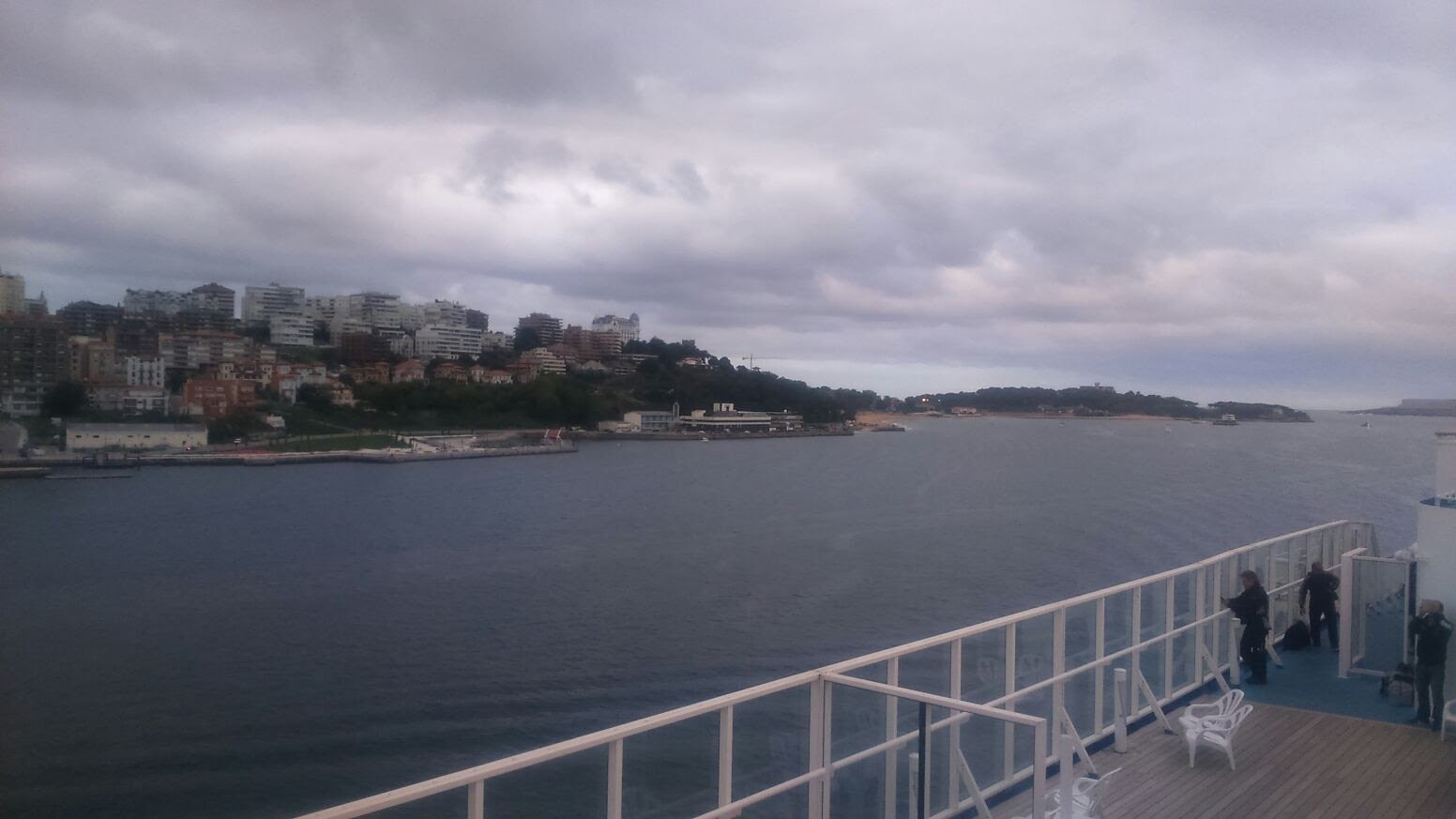
Coming into Santander. “I craved to go beyond the garden gate, to follow the road that passed it by and to set out for the unknown.” from My Journey to Llasa by Alexandra David-Neel
I exchanged Shiatsu for hospitality and met some wonderful people. I walked the Camino de Santiago from Pamplona to Santiago de Compostella (400 miles).
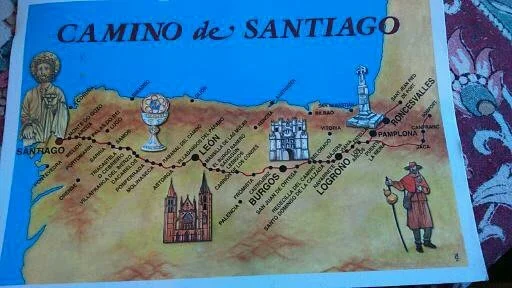
Camino de Santiago postcard
Following that autumn in Spain, I returned many times, walking other caminos such as the Via de la Plata (1000 kms) from Serville to Santiago, and from Porto in Portugal to Santiago. It is said that all roads lead there. I walked pilgrimage in other parts of Spain too, notably in Cataluna. I also walked the Via Sacra in Austria, and shorter routes in Estonia, Greece, Norway, Hungary, France, Switzerland, Croatia, in Ireland, Wales and Scotland.
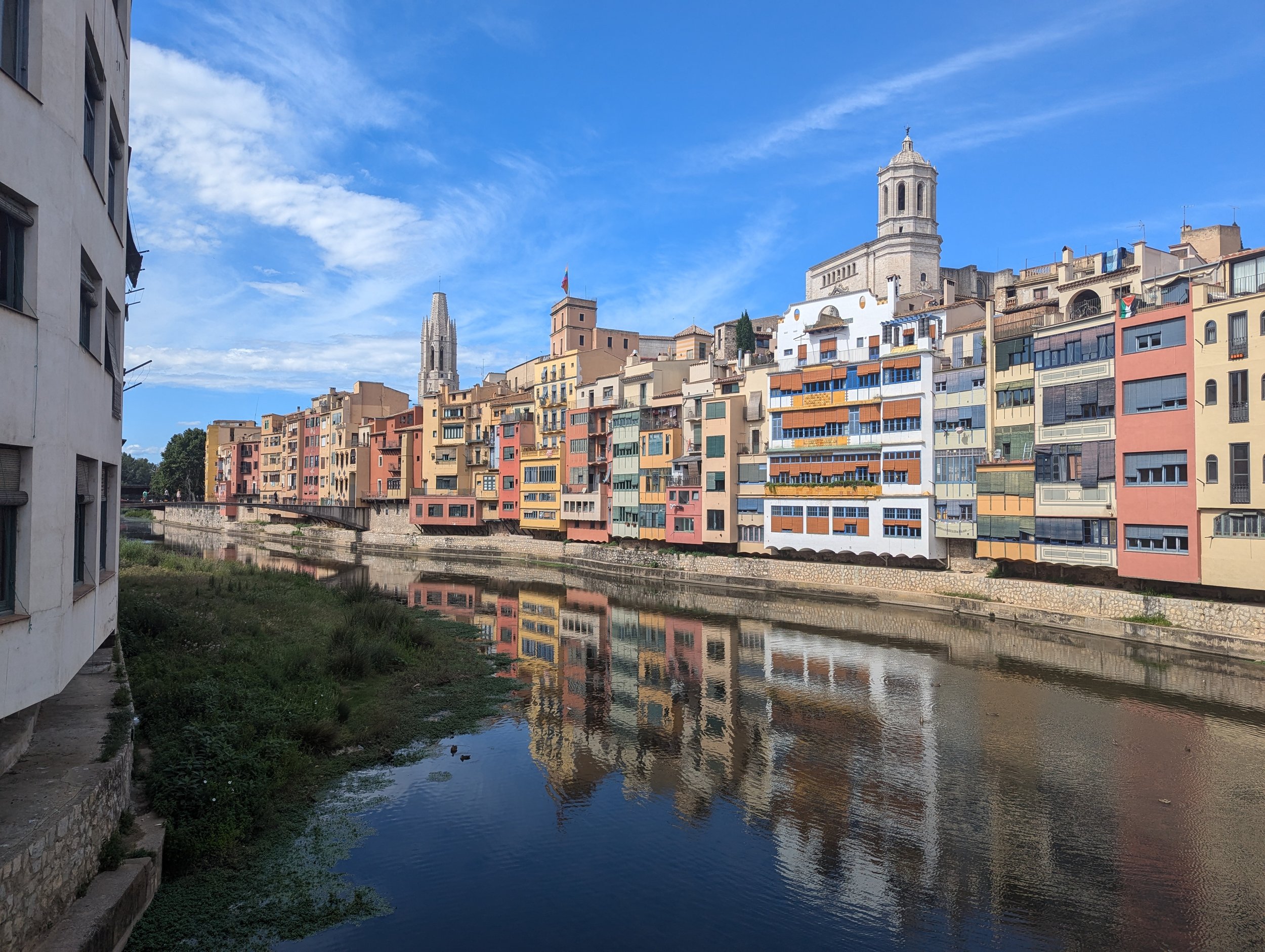
Girona, Spain
In Scotland, I joined the Pilgrimage for COP26 and have walked the St Margaret Way and the St Magnus Way on Orkney.
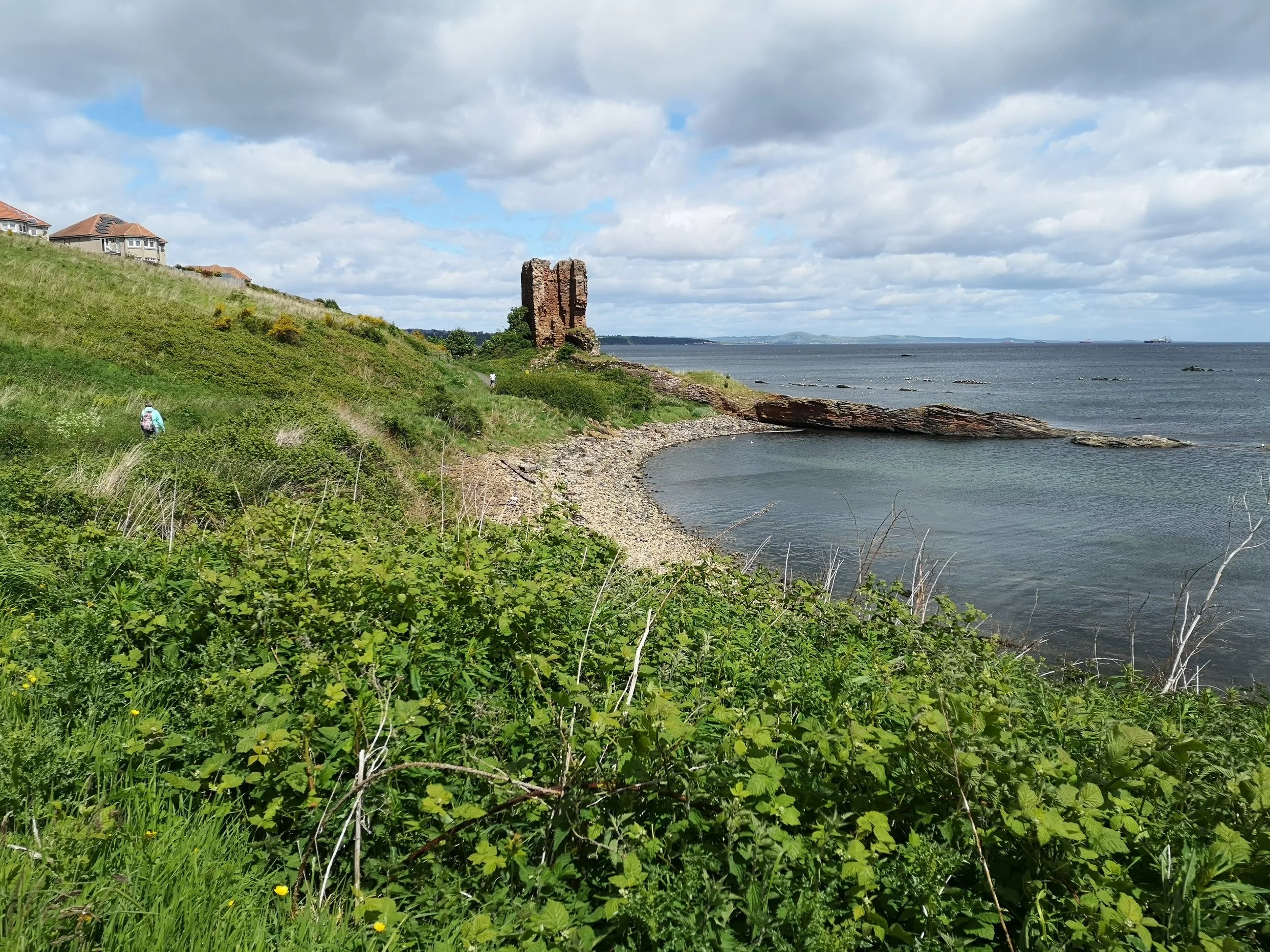
Seafield Tower near Kinghorn, Fife, Scotland
Secular pilgrimages are often long-distance walks that involve walking to places of spiritual significance. Whilst I don’t follow any religion or subscribe to a particular Way, I have studied Taoist philosophy and attended a Buddhist sangha for many years. If I had to choose a deity, it would be Gaia, goddess of the Earth, because being part of nature and walking the landscape is a vital and necessary part of my life. Walking day-by-day, from place to place, one step at a time, is a meditation. Sometimes, the routes are named and prescribed in advance; at other times, I wander or drift in the spirit of psychogeography, following my intuition or signs around me. These walks can be seen as pilgrimage too: walks with an intention, for the chance to muse and remember, to commune with the ground, air and something ‘other’. I walk to see where the path takes me.
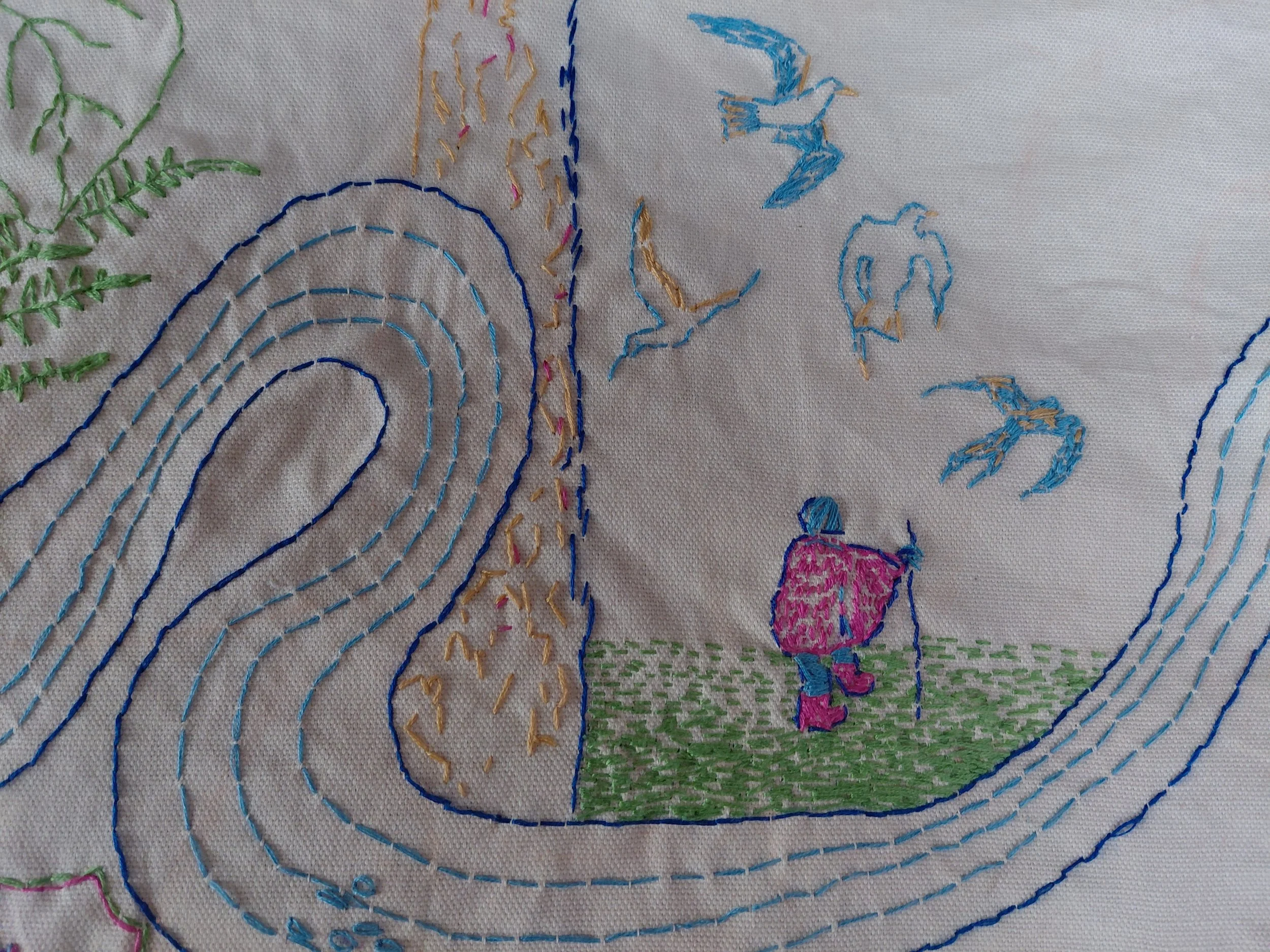
The Granton Burn, a stitched textile map; pilgrimage to a lost river. Edinburgh, Scotland
Walking secular pilgrimage is a simple act in many ways. To keep moving, passing through village, town and city, meeting people and saying goodbye, is humbling and an exercise in letting go. Never staying long, paying my respects and being respectful, I am a simple visitor, a traveller.
Someone who travels, wanders
Peregrination is related to the Peregrine Falcon. The fastest animal known, with dives measuring upwards of one hundred and eighty-six miles per hour, the Falco peregrinus can be found all around the globe and the peregrinus part refers to a wanderer. Jess Jennison in WordOriginStories.com breaks the etymology of the bird’s name down into per meaning through and agr- land. This is further extrapolated to coming from abroad and travelling or migratory. The word apparently changed over time, from peregrinus to pelegrinus (with an ‘l’) then became to pelerin in French and pilegrim in Old English. Over the years, peregrine (the adjective) came to mean having a tendency to wander, and a pilgrim, someone who travels to a holy place.
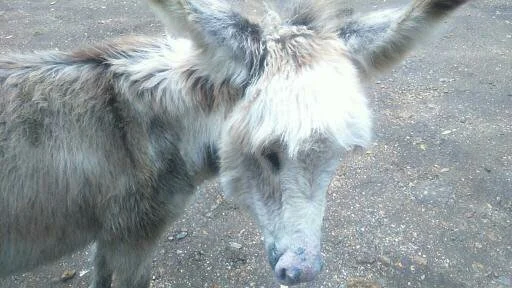
The name of the blog ‘Walking Without a Donkey’ references Robert Louis Stevenson’s Walking with a Donkey in the Cevennes and nods to the fact that I carry my own rucksack; I am my own ass.
Community pilgrimage
The Girona mini pilgrimage is an example of a community pilgrimage. Part of the Walking Arts Encounters in Cataluna, 2022. It was followed by two more in other parts of Cataluna: Olot and Vic. I walked solo pilgrimage along parts of the Cami Sant Jaume before the Walking Arts Encounters began.
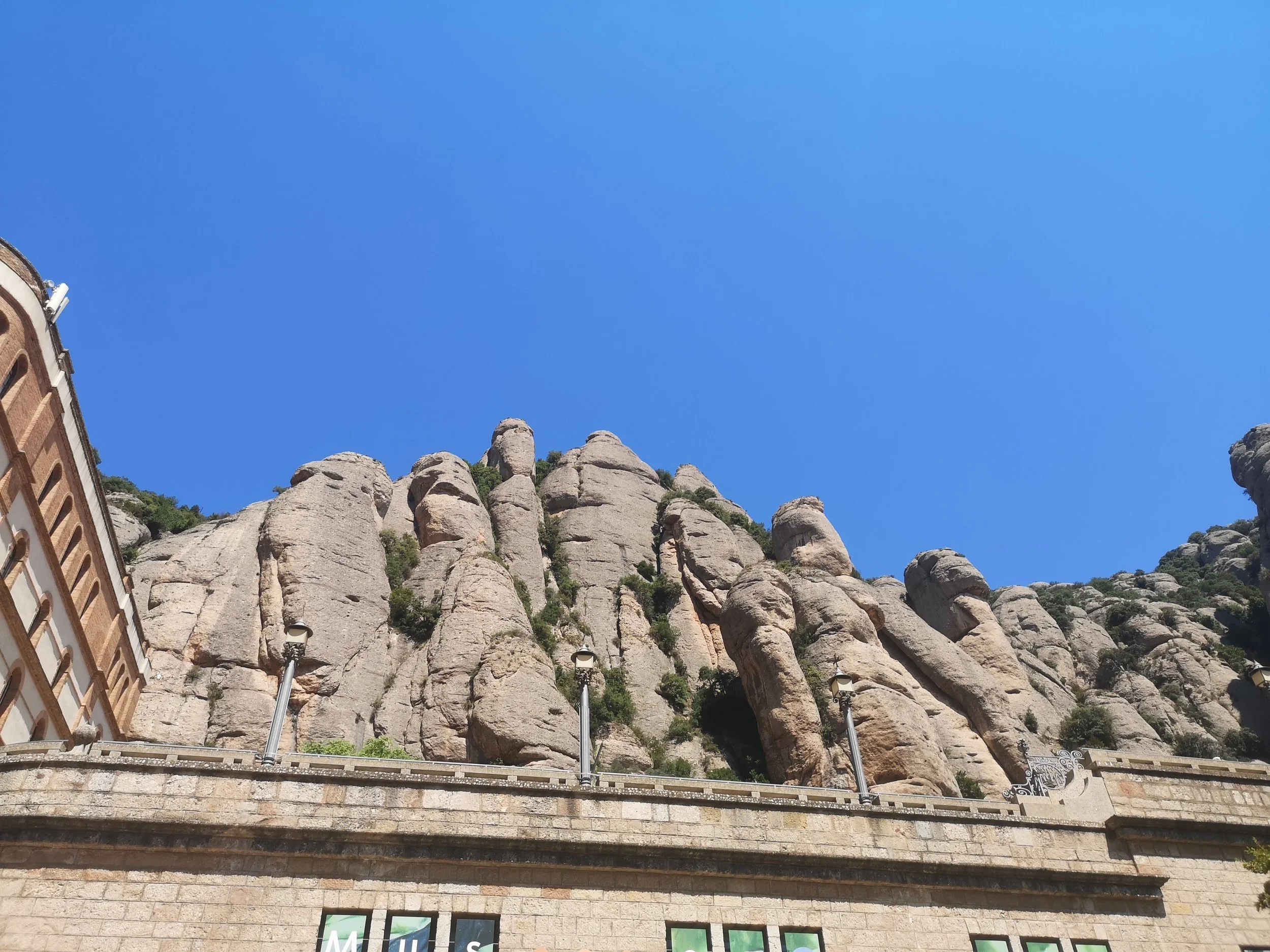
Pilgrimage to Montserrat
All my pilgrimages and long-distance walking can be found on walkingwithoutadonkey.com. The role of the donkey through literature, historically and in pilgrimage can be found In Praise of the donkey.